Last updated 2026-07-25
TL;DR
Zone 0 is CAL FIRE's proposed ember-resistant zone within 5 feet of a home, required under SB 63 (2020) for homes in Very High Fire Hazard Severity Zones. As of 2025 the Board of Forestry has not finalized the regulation; no statewide enforcement date exists yet, though officials have discussed phasing it in after adoption, with 2026 discussed as an early target for new construction.
What is Zone 0 in CAL FIRE's defensible space rules?
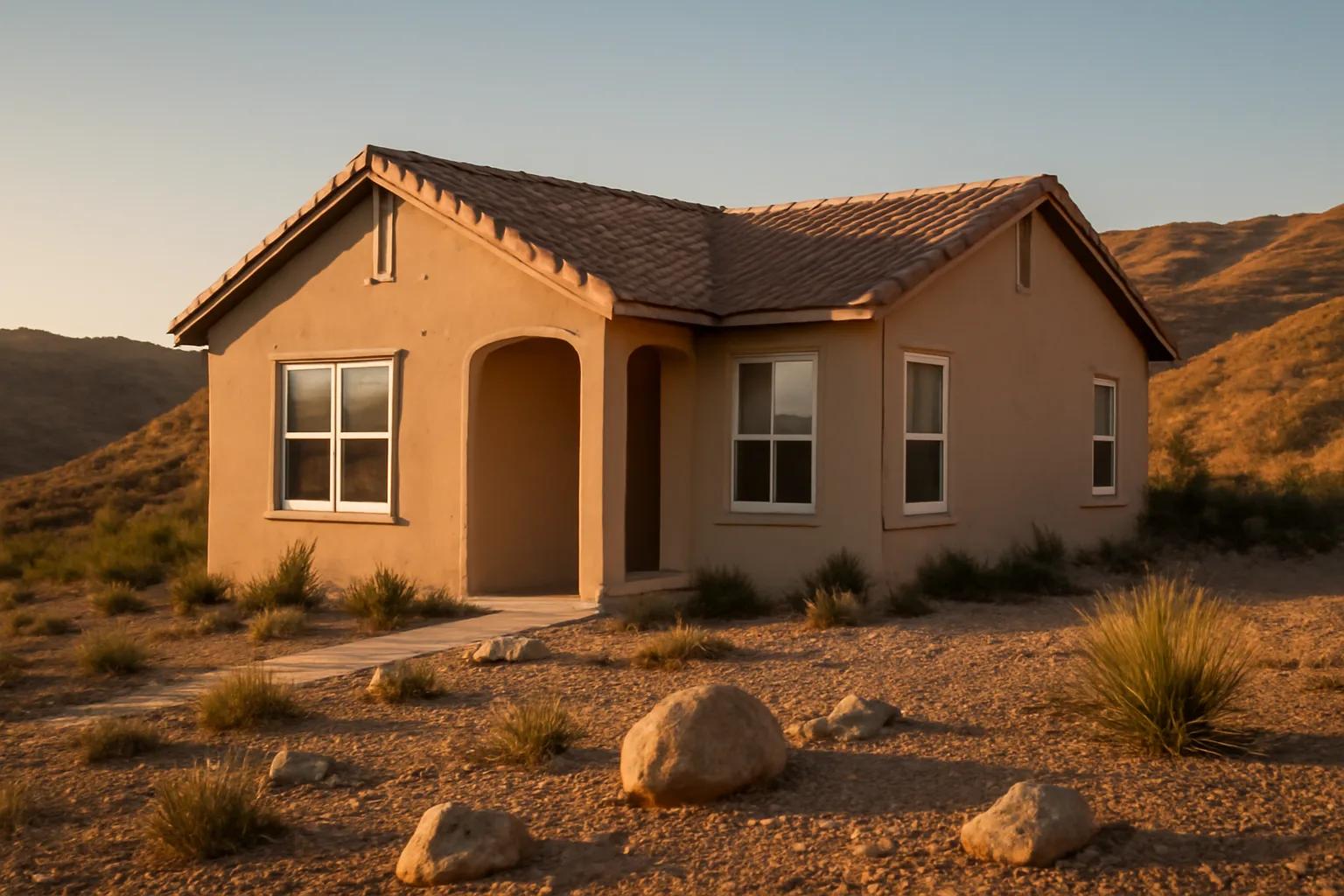
Zone 0 is the innermost of the defensible space zones CAL FIRE uses to describe the ground around a structure, covering the first 0 to 5 feet out from the home's exterior walls, deck edges, and attached structures. The idea is simple: this ring is the most likely place for wind-blown embers to land and ignite something that then sets the house on fire. Most homes lost in wildfires burn from embers landing on or near the structure, not from a wall of flame marching up to the door. CAL FIRE's existing defensible space law (Public Resources Code 4291) already requires 100 feet of managed vegetation clearance around structures in State Responsibility Areas, broken into Zone 1 (0-30 feet) and Zone 2 (30-100 feet) [1]. Zone 0 is a newer, narrower concept that came out of research showing that even good vegetation management in Zones 1 and 2 doesn't stop embers from finding fuel right against the house: mulch, wood fencing touching the siding, dry leaves in gutters, patio furniture cushions, or a wood pile stacked against the wall. Zone 0 isn't legally in effect yet as a statewide enforceable standard. It exists in statute as a mandate for CAL FIRE and the Board of Forestry and Fire Protection to write the actual regulation, and that regulatory process has taken years longer than the original schedule.
When does the California defensible space law (Zone 0) go into effect?
The legal foundation is Senate Bill 63 (2020), which amended Public Resources Code 4291 and directed the Board of Forestry and Fire Protection to develop regulations for an ember-resistant zone within 5 feet of structures in Very High Fire Hazard Severity Zones [2]. SB 63 set an original target of January 1, 2023 for the Board to adopt the regulations, but that date passed without final rules. As of 2025, the Zone 0 regulation is still working through California's formal rulemaking process (public comment periods, revisions, review by the Office of Administrative Law) and has not been adopted as enforceable law. CAL FIRE's own Zone 0 guidance page describes the standards as "recommended" for now, distinct from the mandatory Zone 1 and Zone 2 clearance already in PRC 4291. There is no single confirmed statewide enforcement date you can bank on right now. Boards and legislative staff have discussed a phased approach once rules are finalized, potentially applying first to new construction and then to existing homes on a longer timeline, with 2026 mentioned in some Board of Forestry discussion materials as an early target window for new-construction requirements. Treat any specific 2026 date you see as provisional until the Board formally adopts final text and CAL FIRE publishes it. Check your county or fire district for local Zone 0 ordinances; some jurisdictions, including the City of Santa Barbara area agencies and parts of Southern California, have moved to adopt ember-resistant zone standards locally ahead of the state, so your area may already require it. [Local mitigation rules vary by fire district: confirm your district's current requirement before you invest in changes.]
What will Zone 0 actually require once it's final?
The draft framework CAL FIRE has circulated in guidance and stakeholder meetings centers on removing combustible material from the 0-5 foot zone around structures. Based on CAL FIRE's published Zone 0 recommendations, the core ideas are: - No combustible mulch, bark, or dry vegetation touching the foundation or siding
- Non-combustible ground cover (rock, pavers, bare mineral soil, or well-irrigated low groundcover) within 5 feet of the structure
- No wood fencing or gates directly attached to the house within that zone (a metal gate section at the house connection is the common fix)
- Nothing stored against the house: firewood stacks, propane tanks, trash cans, or lumber
- Trimmed and cleared vents, and screening on vents to keep embers out
- Trees and shrubs pruned back so branches don't overhang or touch the roof or walls None of this is exotic or expensive compared to structural retrofits. Clearing the first 5 feet, moving the woodpile, and swapping bark mulch for gravel is a weekend project for most homeowners, not a contractor job, though a hardscaping contractor can do it faster if you want the rock beds to look intentional rather than patchy.
Why won't people follow the defensible space law in California?
Compliance with existing PRC 4291 defensible space rules is uneven, and the reasons aren't really about laziness. Cost is a real barrier: removing large trees, regrading slopes, or hiring crews to clear brush on a hillside lot can run into the thousands of dollars, and low-income and elderly homeowners on fixed budgets often can't absorb that. Enforcement is also inconsistent. CAL FIRE and local fire agencies conduct defensible space inspections in State Responsibility Areas, but staffing is limited relative to the number of parcels, and inspections in Local Responsibility Areas depend on the local fire department's capacity and priorities. A property can go years without an inspection. There's also a genuine information gap. Some homeowners don't know the specific requirements for their zone, don't realize a canyon-adjacent lot or hillside changes their obligations, or assume renters and HOAs handle it. Others push back because clearing native vegetation feels at odds with erosion control or landscaping they've invested in, and they're not wrong to worry about slope stability if clearing is done badly; the fix is doing it with proper grading and replanting with fire-resistant, deep-rooted groundcover, not skipping clearance altogether. Insurance non-renewal letters have become one of the more effective forcing functions: nothing motivates a $2,000 brush clearing job like a carrier telling you your policy won't renew.
How to prevent wildfires around your own property
You can't control lightning strikes or a downed power line two ridges over, but you have direct control over ignition risk on your own parcel. Start with the things that cause the most home ignitions: embers landing in gutters full of dry leaves, embers igniting mulch or fencing touching the house, and embers finding gaps in vents or under decks. Practical steps in rough priority order: clear gutters and roof valleys of debris every year before fire season, screen attic and foundation vents with 1/8 inch metal mesh, replace or seal gaps in wood fencing where it meets the house, keep the first 5 feet around the structure free of bark mulch and stored combustibles, and maintain the 30-foot and 100-foot vegetation management zones required under PRC 4291 [1]. Ready.gov's wildfire preparedness guidance also recommends clearing leaves and debris from under porches and decks and keeping propane tanks at least 10 feet from structures. Outside your fence line, prevention means not sparking fires in the first place: don't tow chains that drag and spark on pavement, avoid mowing dry grass midday, don't park hot vehicles on dry grass (catalytic converters routinely start roadside fires), and follow local burn bans. CAL FIRE's own "prevent wildfires" guidance emphasizes that the vast majority of California wildfires are human-caused, not lightning-caused [3].
How to prepare for a wildfire before it happens
Preparation splits into three buckets: the property, the go-bag, and the paperwork. Most people do the first two and skip the third, which is a mistake if you ever need to file an insurance claim. Property: complete defensible space work in Zones 1 and 2, harden vents and eaves where you can afford it, and keep a garden hose long enough to reach all sides of the house. Ready.gov recommends assembling an emergency kit with at least a 3-day supply of food and water per person, a battery or hand-crank radio, and copies of important documents in a waterproof container. Go-bag and evacuation: know two routes out of your neighborhood, not one, since fire can block a single road. Sign up for your county's emergency alert system (most California counties use a system tied to Genasys or similar reverse-911 platforms) so you get evacuation orders by text, not by watching the sky. Paperwork, which is the part people skip: photograph and video every room of your house, your roof, your defensible space work, and your major possessions, dated and stored somewhere other than your house (cloud storage or a family member's place). If you're ever hit with a claim dispute or a non-renewal notice, having dated proof of your mitigation work and your home's condition before a fire matters more than most people realize. This is the gap the $99 Wildfire Insurance Survival Kit is built to close: a structured way to document defensible space work, home hardening steps, and property condition before you need it, so you're not scrambling to remember what you did three years ago when an adjuster asks.
How to prevent forest fires and avoid forest fires
Forest fire prevention at the individual level is mostly about not being an ignition source, since most wildfires in the U.S. are human-started. The U.S. Forest Service and CAL FIRE both point to campfires, equipment sparks, debris burning, and vehicles as leading human causes [3]. Concrete habits that matter: fully drown and stir campfires until they're cold to the touch, never leave a fire unattended even for a few minutes, avoid off-road driving or parking on dry grass, check local burn permit and red flag warning status before any outdoor burning, and keep chainsaws and mowers away from dry vegetation during high-wind or high-heat afternoons. Fireworks are a major seasonal cause in California and are illegal in most State Responsibility Areas outside permitted displays. If you smell smoke or see a small fire starting, call 911 immediately rather than trying to fight it yourself unless it's genuinely small and you have a hose or extinguisher at hand. Small fires reported in the first few minutes are dramatically easier to contain than fires that get a 20-minute head start.
How can we prevent forest fires at the community level?
Individual home hardening matters, but wildfire risk is a neighborhood problem, more than a parcel problem. A single home with excellent defensible space next to three homes with dry brush against their fences is still at risk, because fire moves structure to structure once it's established in a subdivision. FireWise USA (run through the National Fire Protection Association in partnership with the Forest Service and state forestry agencies) is the main community-level program, organizing neighborhoods to do coordinated fuel reduction, shared chipper days, and joint defensible space work. Some California counties tie reduced defensible space inspection friction or insurance discussion consideration to active Firewise community status, though this varies by insurer and isn't a promise of any specific discount. HOAs and local fire safe councils can also push for community-wide vegetation management on greenbelts, drainage corridors, and shared open space, which is often the fuel that a single homeowner can't legally clear because it's not on their property. If your neighborhood doesn't have a fire safe council or Firewise group, starting one is realistically the highest-value thing a group of homeowners can do beyond their own yards.
Is Santa Barbara safe from fire?
No coastal California city, including Santa Barbara, is "safe" from wildfire in any absolute sense, and Santa Barbara County has some of the most fire-scarred history in the state. The Thomas Fire (December 2017) burned over 281,000 acres across Ventura and Santa Barbara counties and was, at the time, the largest wildfire in modern California history, followed weeks later by the Montecito debris flow that killed 23 people when rain hit the Thomas Fire burn scar [4]. Parts of Santa Barbara and the surrounding foothill communities (Montecito, Mission Canyon, the Riviera) sit directly against Very High Fire Hazard Severity Zones as mapped by CAL FIRE, meaning the defensible space requirements under PRC 4291 and any future Zone 0 rules apply directly to those homes [5]. Coastal fog and marine layer reduce fire risk somewhat compared to inland chaparral areas, but Santa Ana and sundowner wind events (the same wind pattern that drove the Thomas Fire) can override that protection quickly, especially in fall. If you own property in or near Santa Barbara's wildland-urban interface, check your parcel against CAL FIRE's Fire Hazard Severity Zone viewer rather than assuming coastal proximity protects you [5]. Homeowners here are seeing the same non-renewal pressure as inland foothill communities in the Sierra and San Bernardino ranges.
What fire-safe home requirements take effect in 2026?
There isn't one confirmed, single statewide 2026 deadline for Zone 0 as of this writing; the regulation is still in the Board of Forestry's rulemaking pipeline and hasn't been finalized with an enforceable statewide date. What you'll actually find discussed for 2026 falls into a few buckets, and it's worth keeping them separate: 1. Zone 0 regulation: Board of Forestry staff have floated 2026 in discussion documents as a possible phase-in point for new construction in Very High Fire Hazard Severity Zones, once the rule is formally adopted. This is not yet locked in law. 2. Local ordinances: Some cities and fire districts (parts of Southern California and the Central Coast) have adopted or proposed their own ember-resistant zone ordinances ahead of the state, some with effective dates in 2025 or 2026. Check your specific city or fire protection district. 3. Building code cycles: California's Title 24 building code, including Chapter 7A fire-resistant construction requirements for new homes in Wildland-Urban Interface Fire Areas, updates on a triennial cycle, with the next major code cycle taking effect January 1, 2026 [6]. This affects new construction and major remodels, not existing homes retroactively. The honest answer for a homeowner asking "what do I need to do by 2026" is: check your specific city/county planning department and your fire district's current wildfire ordinance page, because the state Zone 0 rule you may have read about online is still proposed, not final, as of 2025.
How does Zone 0 compare to Zone 1 and Zone 2?
| Zone | Distance from structure | Legal status (as of 2025) | Core requirement | |
|---|---|---|---|---|
| Zone 0 | 0-5 feet | Proposed, not yet finalized statewide | Non-combustible surfaces, no stored fuel touching structure | |
| Zone 1 | 5-30 feet | Mandatory under PRC 4291 in SRA/VHFHSZ | Remove dead vegetation, space plants, prune tree limbs 6 ft up | |
| Zone 2 | 30-100 feet | Mandatory under PRC 4291 in SRA/VHFHSZ | Reduced fuel loads, cut/cured grass to 4 inches, spaced tree canopy | Zones 1 and 2 have been enforceable law for years and are the ones CAL FIRE inspectors actually cite homeowners for today [1]. Zone 0 is the newest layer, addressing the space the older law didn't really cover: the ground and materials in direct contact with the house itself. Until Zone 0 rules are final, following its recommendations is voluntary but genuinely useful, since it's the zone most correlated with structure ignition in post-fire damage assessments. |
Frequently asked questions
When does the California defensible space law go into effect?
The existing 100-foot defensible space law (PRC 4291, Zones 1 and 2) has been in effect for years. The newer Zone 0 (0-5 foot ember-resistant zone) rule from SB 63 is still in Board of Forestry rulemaking as of 2025 and has no confirmed statewide enforcement date yet; some discussion materials mention 2026 for new construction, but nothing is finalized.
Why won't people follow the defensible space law in California?
Cost, inconsistent enforcement, and lack of awareness are the main reasons. Clearing brush or trees on a hillside lot can cost thousands of dollars, inspections are limited by fire agency staffing, and some homeowners don't know their specific zone requirements. Insurance non-renewal notices have become a major forcing function for compliance.
How can I prevent wildfires around my home?
Clear gutters and roofs of debris, screen vents with 1/8 inch metal mesh, remove combustible mulch and stored items within 5 feet of the structure, maintain the 30 and 100-foot vegetation zones under PRC 4291, and eliminate ignition sources like dragging trailer chains or mowing dry grass midday.
How do I prepare for a wildfire?
Complete defensible space work, assemble a 3-day emergency kit with water, food, and a radio per Ready.gov guidance, know two evacuation routes, sign up for county emergency alerts, and photograph your home and mitigation work for insurance documentation before a fire happens, not after.
How do I prevent forest fires?
Fully drown and stir campfires until cold, never leave fires unattended, avoid parking on dry grass or driving off-road during fire season, check red flag warnings before burning debris, and report small fires immediately by calling 911. Most wildfires are human-caused, not lightning-caused.
How can we prevent forest fires as a community?
Join or start a Firewise USA group through the National Fire Protection Association to coordinate neighborhood fuel reduction, chipper days, and shared defensible space work on common areas like greenbelts and drainage corridors that individual homeowners can't clear alone.
What fire-safe home requirements take effect in 2026?
No single confirmed statewide Zone 0 deadline exists yet; the rule is still in Board of Forestry rulemaking. California's Title 24 Chapter 7A building code update for new wildland-urban interface construction takes effect January 1, 2026. Check your local fire district for any local ordinances with 2026 dates.
Is Santa Barbara safe from fire?
No. Santa Barbara County has significant wildfire history, including the 2017 Thomas Fire that burned over 281,000 acres and preceded the deadly Montecito debris flow. Foothill neighborhoods sit in Very High Fire Hazard Severity Zones and face the same defensible space rules as other California wildland-urban interface areas.
What exactly is Zone 0 in defensible space terms?
Zone 0 is the 0-5 foot ember-resistant zone immediately around a structure, proposed under California SB 63 (2020). It calls for non-combustible ground cover, no stored fuel or wood fencing touching the house, and cleared vents, though it is not yet a finalized, statewide enforceable rule as of 2025.
Does Zone 0 apply to my house right now?
Not as a mandatory statewide rule yet, since the Board of Forestry hasn't finalized the regulation. However, some local fire districts and cities have adopted their own ember-resistant zone ordinances already, so check your specific jurisdiction rather than assuming the state rule timeline applies to you.
What's the difference between Zone 0, Zone 1, and Zone 2?
Zone 0 covers 0-5 feet from the structure and focuses on non-combustible surfaces (proposed rule). Zone 1 covers 5-30 feet, requiring dead vegetation removal and plant spacing. Zone 2 covers 30-100 feet, requiring reduced fuel loads and cut grass. Zones 1 and 2 are mandatory under PRC 4291 today.
Can I get an insurance discount for Zone 0 compliance?
No guaranteed statewide discount exists tied specifically to Zone 0, since it isn't a finalized regulation yet. Some insurers consider defensible space and hardening documentation in underwriting decisions, but discounts and reinstatement decisions are made by each carrier; homeowners should document their own mitigation work rather than assume a specific discount applies.
Sources
- California Public Resources Code Section 4291: Defensible space law requiring 100 feet of managed vegetation clearance around structures in Zones 1 and 2
- California SB 63 (2020), Legislative Counsel's Digest: SB 63 directed the Board of Forestry and Fire Protection to develop an ember-resistant zone regulation within 5 feet of structures
- CAL FIRE, Wildfire prevention information: The majority of California wildfires are caused by human activity rather than natural causes like lightning
- CAL FIRE, Thomas Fire incident archive: The Thomas Fire burned over 281,000 acres across Ventura and Santa Barbara counties starting December 2017
- CAL FIRE, Fire Hazard Severity Zone Viewer: Fire Hazard Severity Zone maps determine which properties fall under Very High Fire Hazard Severity Zone defensible space requirements
- California Department of Housing and Community Development, Title 24 Building Standards Code cycle: California's triennial building code update, including Chapter 7A wildland-urban interface fire provisions, takes effect January 1, 2026