Last updated 2026-07-25
TL;DR
Zone 0 is the 0-5 foot ember-resistant buffer touching your house, required by California law (SB 3-2020, adding Gov. Code 51182). CAL FIRE has written the regulation but it isn't enforceable yet; no statewide compliance deadline exists as of 2026. Clear combustibles, mulch, and vegetation from that 5-foot ring now, because local ordinances and insurers are already grading it.
what is zone 0 defensible space, exactly
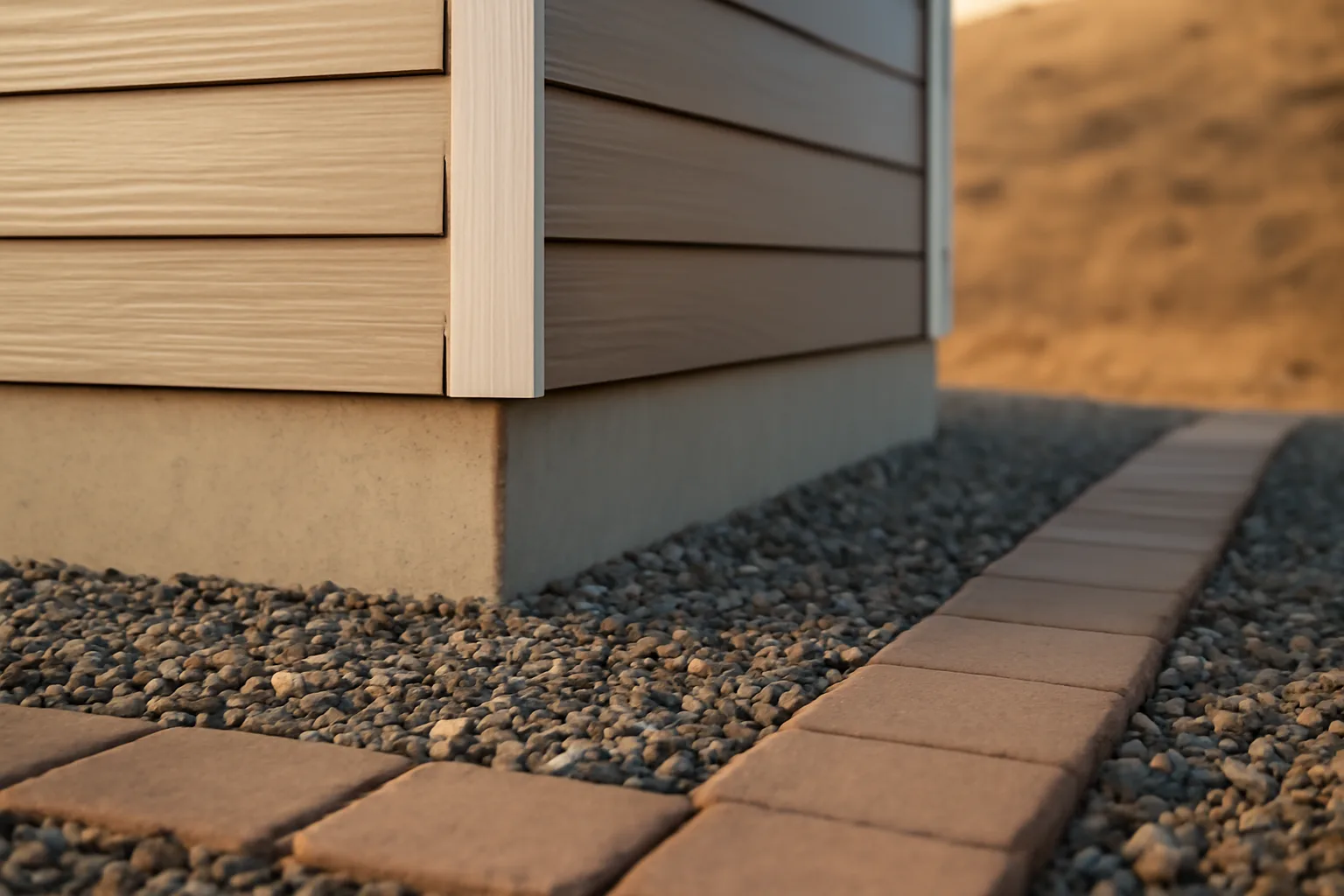
Zone 0 is the 5 feet of ground touching your house, deck, and any attached structure. CAL FIRE's defensible space framework breaks your property into three rings: Zone 0 (0-5 feet, the "ember-resistant zone"), Zone 1 (5-30 feet), and Zone 2 (30-100 feet). Zone 0 is the newest and strictest of the three, and it's the one that actually decides whether embers landing near your foundation ignite your house or just burn out on bare gravel. The idea comes from fire behavior research, not guesswork. Most homes lost in wildfires don't burn because a wall of flame rolls through. They burn because wind-blown embers, sometimes traveling a mile or more ahead of the fire front, land in mulch, under decks, in gutters, or against siding and smolder until they catch. Zone 0 targets exactly those ignition points. CAL FIRE's proposed Zone 0 standard calls for no combustible mulch, no dry vegetation, and no stored combustible items (firewood, propane tanks, wood furniture) within that 5-foot band. Non-combustible ground cover like gravel, pavers, or bare soil is what the draft regulation recommends. A few specific, well-spaced, low-growing, irrigated plants are allowed in some draft versions, but the safest and cheapest approach is to treat those 5 feet like a moat: rock, concrete, or dirt, nothing that burns. For the next two rings out, see how the zones compare in the defensible space zones guide, and check fire safe landscaping right against the house for plant lists that work outside the 5-foot line.
when does the california defensible space law go into effect
There is no statewide enforcement date yet. The law authorizing Zone 0, Senate Bill 3 (2020), directed the Board of Forestry and Fire Protection to adopt ember-resistant zone regulations by January 1, 2023 [1]. That deadline came and went without a final regulation. CAL FIRE and the Board have been through multiple draft rulemaking cycles since, including a formal proposed regulatory text released for public comment, but as of the most recent board updates, the regulation has not been finalized or made enforceable statewide [2]. Here's the confusing part: the underlying statute (Government Code Section 51182) already requires "the area from 5 feet to 100 feet from the structure" to be maintained as defensible space, and it directs that the 0-5 foot zone "shall be maintained" per Board regulations once adopted [3]. Until the Board's Zone 0 regulation is formally adopted and effective, that specific 5-foot requirement sits in a legal gray zone: written into the statute's structure, but without an enforceable regulatory standard behind it yet. That doesn't mean you're off the hook. Local jurisdictions, fire districts, and CAL FIRE's existing 100-foot defensible space requirements are enforceable right now under existing law, and many local fire codes already require ember-resistant conditions near structures independent of the state Zone 0 rulemaking. Insurers are also grading homes on Zone 0-style conditions in their own inspections, regulation or not. Check with your [local fire district's requirements] (they vary; call your fire marshal's office or check your county's fire safe council page) before assuming you have time to wait. If you've heard "fire safe home rules take effect in 2026," that claim isn't confirmed by any CAL FIRE or Board of Forestry publication currently available. Treat any specific 2026 statewide effective date with real skepticism until the Board of Forestry posts a final adopted regulation with an effective date on its rulemaking page [2].
why won't people follow the defensible space law in california
Cost, confusion, and enforcement gaps are the three big reasons, and they compound each other. A 2020 UC Cooperative Extension survey and related wildfire risk-perception research found that homeowners frequently cite expense and uncertainty about what's actually required as reasons for incomplete defensible space work, even when they understand the wildfire risk. Removing mature landscaping that's been in the ground for 20 years, replacing mulch beds with gravel, and re-siding a wood deck isn't a weekend project. It can run from a few hundred dollars in DIY labor to $10,000 or more for a full property with mature trees and slope. Confusion is real too. Because the Zone 0 regulation itself isn't finalized, homeowners get inconsistent guidance: one fire inspector says clear everything within 5 feet, a landscaper says a few irrigated plants are fine, and a neighbor swears their insurer didn't care either way. That inconsistency breeds procrastination, which is rational in a narrow sense (why redo it twice?) but risky in the sense that matters (your house doesn't care whether the rule is finalized when embers land). Enforcement is also thin. CAL FIRE and local fire agencies are required to do defensible space inspections, but staffing and property counts mean many parcels go years between visits, especially in less fire-prone-looking pockets of otherwise high-risk counties. Without a citation or a red tag showing up in the mailbox, there's no forcing function, and people prioritize the visible, felt costs (money, labor, losing shade trees) over the invisible, probabilistic cost (my house might burn in a fire that hasn't happened yet). The honest answer for a homeowner facing non-renewal: don't wait for the citation. Insurers are already inspecting to something like the Zone 0 standard, and a completed 5-foot clearance is one of the more persuasive things you can put in front of an underwriter or a state-run FAIR Plan file. See defensible space clearing contract guidance if you're hiring it out.
how to prepare for a wildfire, step by step
Preparing for a wildfire happens in three phases: harden the structure, clear the zones around it, and build an evacuation plan you've actually rehearsed. Ready.gov's wildfire preparedness guidance frames it the same way: reduce the chance your home ignites, then make sure your family can get out fast if it doesn't work [4]. Start with Zone 0 because it's cheapest per square foot of risk reduction: clear the 5 feet touching your house of mulch, dead leaves, firewood stacks, and anything flammable stored against the walls. Move outdoor furniture cushions and doormats indoors during red flag warnings. Check that vents are covered with 1/8-inch (or the CAL FIRE-recommended 1/16-to-1/8-inch) corrosion-resistant mesh to block ember entry. Next, work outward through Zone 1 (5-30 feet) and Zone 2 (30-100 feet), thinning vegetation, limbing up trees 6 feet from the ground, and spacing tree canopies so fire can't jump crown to crown. Clean gutters and roof valleys of pine needles and leaf litter; that debris is a classic ember catcher. Then build your go-bag and evacuation plan. Ready.gov recommends every household have an emergency kit with water (one gallon per person per day for several days), medications, copies of insurance and identification documents, and a communication plan for family members who might be separated when evacuation orders hit [4]. Sign up for your county's emergency alert system now, not during a fire, and know two routes out of your neighborhood in case one is blocked. Finally, document your home. Photograph or video every room, closet, and the exterior, including receipts for major purchases if you have them, before anything happens. This is the single most useful thing you can do for your own claim process later, and it costs nothing but an afternoon.
how to prevent wildfires (and forest fires) as a homeowner
You can't stop lightning strikes or arson, but you can remove the fuel and ignition sources within your control, and that's most of what "preventing" a wildfire actually means at the property level. CAL FIRE's own numbers: roughly 95% of wildfires in California are human-caused, whether from equipment sparks, unattended campfires, downed power lines, or debris burning gone wrong [5]. That statistic matters because it means most fire starts are preventable behavior, not fate. On your own land: never leave a campfire unattended and fully drown and stir it until it's cold to the touch. Don't park or idle vehicles over dry grass; catalytic converters run over 500°F and are a documented ignition source. Mow before 10 a.m. and avoid mowing on Red Flag Warning days. If you burn debris, check with your local fire agency for permit requirements and burn day restrictions, because unpermitted debris burning is one of the most common preventable wildfire causes CAL FIRE cites [5]. At the neighborhood level, the same defensible space work that protects your house also slows fire spread to your neighbor's house, and vice versa. Fire doesn't respect property lines. A block where every house has done Zone 0 and Zone 1 work is measurably harder for a wildfire to move through than a block where one overgrown lot lets fire build intensity before it reaches denser housing. "How to avoid forest fires" and "how to prevent forest fires" get asked constantly, and the honest answer is the same at scale as it is at the yard level: reduce fuel, control ignition sources, and don't be the spark. Public land agencies do prescribed burns and fuel breaks for the same reason you clear Zone 0, to remove the fuel that lets a small fire become an unstoppable one.
is santa barbara safe from fire
No area in California's wildland-urban interface is "safe" from fire risk, and Santa Barbara County has some of the most documented fire history in the state. The 1990 Painted Cave Fire, the 2017 Thomas Fire (at the time the largest wildfire in modern California history, burning over 281,000 acres and destroying more than 1,000 structures across Ventura and Santa Barbara counties), and the resulting Montecito debris flow that killed 23 people are part of the region's recent history, not ancient history [6]. CAL FIRE's Fire Hazard Severity Zone maps show large sections of unincorporated Santa Barbara County, particularly the foothill communities like Montecito, Mission Canyon, and the hills above the city itself, rated as Very High Fire Hazard Severity Zone . That classification isn't cosmetic; it triggers specific building code requirements (Chapter 7A) for new construction and defensible space obligations for existing homes. The city of Santa Barbara proper, closer to the coast and away from the foothills, carries lower hazard ratings on the same CAL FIRE maps, but "lower" isn't "none." Santa Ana-style sundowner winds specific to the Santa Barbara area have driven multiple historical fires downslope toward developed areas fast. If you own property anywhere in the county's foothill zones, defensible space work and Chapter 7A-compliant hardening aren't optional extras; they're the difference in fire behavior research between a home that survives an ember storm and one that doesn't.
what to actually clear out of your zone 0 ring
| Bark or wood mulch | Remove | Gravel, decomposed granite, pavers | |
|---|---|---|---|
| Dry leaves/pine needles | Remove | Rake weekly during fire season | |
| Firewood stacks | Remove from 0-5 ft | Store 30+ feet away, elevated | |
| Wood fencing attached to house | High risk | Replace last 5 ft with metal gate section | |
| Potted plants (dry) | Remove or keep irrigated only | Water regularly or relocate | |
| Propane tanks/grills | Remove | Store outside Zone 0, away from vents | |
| Door mats (natural fiber) | Remove during red flag days | Synthetic or remove entirely | |
| Overhanging tree limbs | Trim back | Keep canopy clear of roof and Zone 0 | This table reflects CAL FIRE's general Zone 0 guidance framework; exact allowed materials can vary by local fire district ordinance, so confirm specifics with your county before finalizing (guided fill-in: [insert your local fire district's Zone 0 material list here]). |
The list is short and that's the point: Zone 0 isn't about landscaping, it's about removing anything that can catch an ember and hold a flame long enough to reach your siding. | Item | Zone 0 status | What to do instead |
how insurers and fair plans are already grading zone 0, even without a final state rule
Insurance underwriting doesn't wait for regulations to catch up to risk models. Several major California carriers and the state's FAIR Plan already use wildfire risk scoring tools that assess defensible space conditions, including immediate-perimeter vegetation and combustible material near the structure, as part of underwriting and renewal decisions. If you've received a non-renewal notice or an inspection letter, the inspector or the aerial/satellite imagery model behind it is very likely already looking at something functionally close to Zone 0: What's touching your house? Is there a wood pile against the wall? Is the deck's understory full of dry leaves? Documenting that you've cleared this zone, with dated photos, is one of the more concrete things a homeowner can hand back to an underwriter. This is also where a lot of homeowners want someone else to fight the fight for them, and it's worth being direct: neither this article nor any product sold at DefensibleHome negotiates with your insurer, files a claim on your behalf, or promises reinstatement or a discount. What we can help with is getting your own documentation organized and defensible. The $99 Wildfire Insurance Survival Kit (see the survival kit builder) is built around exactly that: a structured way to photograph, log, and package your defensible space and hardening work so you have something real to submit, not a guarantee of what the insurer does with it. For the broader hardening picture beyond vegetation, the home hardening priorities and fire at a house case walkthroughs cover roofing, vents, and siding choices that pair with Zone 0 clearing.
how zone 0 compares to zone 1 and zone 2
| Zone 0 | 0-5 feet | Ember-resistant, non-combustible ground cover, no stored fuel | |
|---|---|---|---|
| Zone 1 | 5-30 feet | Thinned, spaced vegetation; no ladder fuels; lawns mowed low | |
| Zone 2 | 30-100 feet | Reduced fuel volume; spaced trees; managed brush | Zone 1 and Zone 2 requirements are already enforceable under Government Code 51182 and have been for years; it's specifically the 0-5 foot Zone 0 standard that's still in regulatory limbo [1] [3]. That means if you're doing triage on a budget, Zone 1 and Zone 2 compliance is the part you can be cited for today. Zone 0 is the part that's cheapest to do anyway (it's mostly removal, not planting) and the part most likely to matter for insurance underwriting regardless of the state's timeline. |
Zone 0 is the strictest and narrowest; the other two zones allow more vegetation but still require real management. Here's the practical breakdown most CAL FIRE materials use: | Zone | Distance from structure | What's required |
what fire-safe home rules take effect in 2026
No confirmed statewide CAL FIRE or Board of Forestry regulation currently sets a 2026 effective date for new fire-safe home requirements; that specific claim isn't supported by any current Board of Forestry rulemaking notice or CAL FIRE bulletin. What is happening on a rolling basis: local jurisdictions in Very High and High Fire Hazard Severity Zones continue adopting or updating Chapter 7A ignition-resistant construction requirements for new builds and major remodels, and some counties have moved on their own defensible space and vegetation management ordinances ahead of the state Zone 0 rule. If you've seen a specific "2026" date attached to Zone 0 or a fire-safe home mandate, the most likely explanations are a local ordinance in a specific county or city (check your county's building department or fire marshal's page directly), a misreading of the original 2023 SB 3 deadline that already passed without final adoption, or a proposed timeline circulating in draft board materials that hasn't been formally adopted. The safest move is to check the Board of Forestry and Fire Protection's rulemaking page directly for the current status before making purchasing or renovation decisions based on a specific date [2].
Frequently asked questions
When does the California defensible space law go into effect?
The underlying law, Government Code Section 51182, has been in effect for years for the 5-to-100-foot zones. The specific Zone 0 (0-5 foot) ember-resistant zone regulation was supposed to be adopted by January 1, 2023 under SB 3 (2020), but as of the most recent Board of Forestry updates, it has not been finalized statewide. Check fire.ca.gov for the current status.
Why won't people follow the defensible space law in California?
Cost, confusion over an unfinalized Zone 0 standard, and thin enforcement are the main reasons cited in UC Cooperative Extension wildfire risk research. Clearing mature landscaping can cost thousands of dollars, guidance varies by inspector and locality, and many parcels go years without a fire agency inspection, so there's little immediate pressure to act.
How do I prevent wildfires around my own home?
Clear Zone 0 (0-5 feet) of mulch, dead vegetation, and stored fuel; never leave campfires unattended; avoid parking on dry grass; check local burn permit rules before debris burning. CAL FIRE attributes roughly 95% of California wildfires to human causes, so controlling ignition sources on your own property matters as much as clearing fuel.
How should I prepare for a wildfire this season?
Harden your home's vents and roof edges, clear all three defensible space zones starting with Zone 0, build a Ready.gov-style emergency kit with several days of water and medications, photograph your home's interior and exterior for insurance documentation, and rehearse two evacuation routes with your household before fire season starts.
How can we prevent forest fires at a larger scale?
Beyond individual property work, prevention includes prescribed burns and fuel breaks on public land, enforcing burn permits and equipment spark-arrestor rules, maintaining power line clearance, and coordinated neighborhood defensible space so fire can't build intensity moving through a block toward denser housing.
What fire-safe home rules take effect in 2026?
No confirmed statewide CAL FIRE regulation currently sets a 2026 effective date for new fire-safe home requirements. Some counties have local ordinances ahead of the state's stalled Zone 0 rulemaking; check your specific county fire marshal or building department page rather than relying on a general 2026 claim.
Is Santa Barbara safe from fire?
No part of Santa Barbara County is fire-free, and CAL FIRE hazard maps rate large foothill areas like Montecito and Mission Canyon as Very High Fire Hazard Severity Zone. The 2017 Thomas Fire burned over 281,000 acres in the region. Coastal city areas carry lower ratings but aren't risk-free, especially during sundowner wind events.
What exactly counts as Zone 0 in defensible space planning?
Zone 0 is the 0-to-5-foot ring touching your house, deck, and attached structures. CAL FIRE's framework calls for non-combustible ground cover (gravel, pavers, bare soil) and removal of mulch, dry vegetation, firewood, and other stored combustibles within that band.
Is Zone 0 clearance legally required right now in California?
The specific state Zone 0 regulation isn't finalized or enforceable statewide yet, but Zones 1 and 2 (5 to 100 feet) are enforceable under existing law, and many local fire districts and insurers already require or grade Zone 0-equivalent conditions independently.
What plants are allowed in Zone 0?
Draft CAL FIRE guidance is conservative: few or no plants directly against the structure, with any allowed plants being low-growing, well-irrigated, and well-spaced. The safer and simpler approach most homeowners use is non-combustible ground cover only, saving planting for Zone 1 and beyond.
How much does Zone 0 clearing typically cost?
Costs vary widely by lot size, existing landscaping, and whether you DIY or hire out. Simple DIY removal of mulch and debris might cost under $200 in materials for gravel replacement; full removal of established plantings and hardscaping around a house can run several thousand dollars, especially with contractor labor.
Does clearing Zone 0 guarantee my insurance gets reinstated?
No. Defensible space work, including Zone 0 clearance, can support your case with an insurer or the FAIR Plan, but no contractor, product, or article can promise reinstatement, a discount, or claim approval. Insurers make their own underwriting decisions; documentation only gives you something real to submit.
What's the difference between Zone 0, Zone 1, and Zone 2?
Zone 0 (0-5 feet) requires near-total removal of combustibles touching the structure. Zone 1 (5-30 feet) allows thinned, spaced vegetation with no ladder fuels. Zone 2 (30-100 feet) allows more vegetation but requires reduced fuel volume and spaced trees to slow fire spread.
Sources
- California Legislature, Senate Bill 3 (2020): Board of Forestry directed to adopt ember-resistant zone (Zone 0) regulations by January 1, 2023
- California Board of Forestry and Fire Protection, Rulemaking: Zone 0 regulation rulemaking status and draft proposals, not yet finalized statewide
- California Government Code Section 51182: Statutory defensible space requirement from 5 to 100 feet and reference to 0-5 foot zone regulations once adopted
- CAL FIRE, Wildfire Prevention: Approximately 95 percent of California wildfires are human-caused
- CAL FIRE, Thomas Fire Incident Archive: Thomas Fire burned over 281,000 acres and destroyed more than 1,000 structures in 2017
- CAL FIRE, Fire Hazard Severity Zone Maps: Foothill areas of Santa Barbara County classified as Very High Fire Hazard Severity Zone