Last updated 2026-07-25
TL;DR
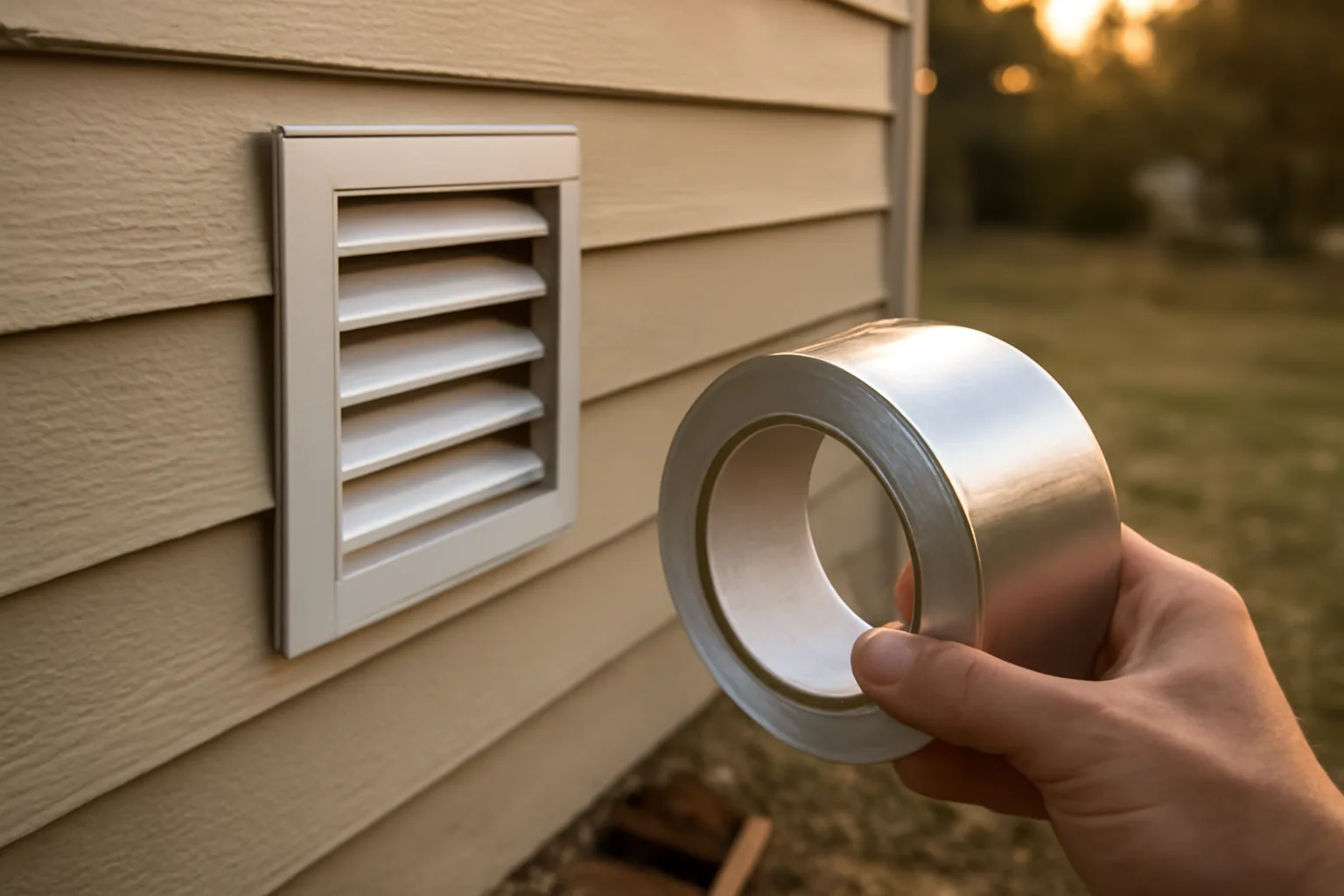
Fire resistant tape sold at Home Depot (usually foil or fiberglass HVAC/duct tape rated to 300-600°F) is built for heat-resistant sealing jobs, not for stopping wildfire embers or flame contact on a house. For real ember protection, CAL FIRE's Zone 0 guidance calls for noncombustible materials, ember-resistant vents, and cleared vegetation, not tape from the hardware aisle.
What is "fire resistant tape" at Home Depot actually rated for?
Search "fire resistant tape" on homedepot.com and you get a mix of foil-faced HVAC tape, fiberglass exhaust wrap tape, and high-temperature silicone or aluminum tape meant for pipes, ducts, and engine compartments. These products are rated to withstand sustained temperatures in the 300°F to 600°F range depending on the brand, which is genuinely useful for sealing a dryer vent or wrapping a hot water line. A wildfire ember bed and radiant heat from a structure fire routinely exceed 1,000°F, and direct flame contact goes well past that. No tape product sold at a hardware store is tested or rated as a building material for wildfire exposure. The National Institute of Standards and Technology has documented flame temperatures in wildland-urban interface fires reaching well above the ignition point of most home materials, which is why hardening focuses on eliminating ignition pathways rather than adding a barrier layer. So if you searched this term hoping for a $12 fix to keep embers out of your attic vents or siding gaps, the honest answer is that product doesn't exist at Home Depot. It doesn't exist anywhere else either. The fixes that work cost more and involve actual material changes, which the rest of this article covers.
Can tape actually stop embers or wildfire heat?
No. Embers ignite homes by lodging in gaps, vents, gutters, and combustible debris, not by radiating heat through a taped seam. The mechanism of ignition is physical intrusion of a burning ember into a vulnerable opening, then smoldering ignition of nearby fuel (mulch, dry leaves, a wood fence, siding). CAL FIRE's home hardening guidance is explicit that vents need 1/8 inch metal mesh screening or ember- and flame-resistant vents, not tape or foam sealant, because embers work their way through gaps that adhesive products aren't designed to survive under fire conditions [1]. Tape adhesive itself is often petroleum-based and will soften, melt, or burn before the substrate does. If you're trying to seal a specific known gap (an attic vent frame, a soffit joint), the fix is mechanical: metal flashing, corrosion-resistant mesh, or fire-rated caulk rated for that specific application, installed by someone who knows your local vent and eave requirements. Tape is a placeholder, not a hardening measure.
What should I actually buy at Home Depot for wildfire home hardening?
| Vent mesh | 1/8 inch (not 1/4 inch) corrosion-resistant metal mesh | Hardware/screening | |
|---|---|---|---|
| Ember-resistant vents | Listed to CAL FIRE's approved vent product list or tested to SFM 12-7A-1 | Special order/HVAC | |
| Class A roofing underlayment/shingles | Class A fire rating on the package | Roofing aisle | |
| Noncombustible mulch alternative | Gravel, decomposed granite, rock | Landscaping/bulk | |
| Metal flashing | Galvanized steel, for gaps at eaves and deck ledgers | Sheet metal/roofing | |
| Fire-rated caulk | Rated for the specific gap size and substrate, not general purpose | Caulk/sealants | None of this is exotic. It's mostly standard building material, just chosen for noncombustibility and ember resistance instead of price alone. The California State Fire Marshal maintains the actual product listings for wildfire-rated vents and materials if you want to check a specific SKU before buying [2]. |
Skip the tape aisle and go to vents, mesh, and roofing. Here's what actually has a wildfire-relevant rating and where to find it in a typical big box store. | Item | What to look for | Where in store |
How to prevent wildfires from starting near my home
Most wildfires near homes start from human causes: equipment sparks, downed power lines, debris burns, vehicle exhaust on dry grass, and unattended campfires. The U.S. Forest Service and Smokey Bear campaign put the human-caused share of wildfires at roughly 85 percent nationally, which is why so much prevention messaging targets behavior, more than terrain. Around your own property, the highest-leverage prevention steps are boring but effective. Don't mow dry grass during hot, windy afternoons (mower blades striking rock are a known ignition source). Keep chains from dragging behind trailers. Don't park hot vehicles on dry vegetation. CAL FIRE and most state forestry agencies also ask residents to check local burn permit rules before any debris burning, since permitted burn windows shift with fire weather. On the vegetation side, defensible space clearing matters as much as ignition-source discipline. Fire safe landscaping next to your house covers plant selection and spacing in detail, and it's worth doing before you spend money on tape, sealant, or anything else.
How to prepare for a wildfire (before it starts)
Preparation splits into three buckets: the structure, the zone around it, and your documentation and evacuation plan. Skipping any one of these leaves a real gap. For the structure: Class A roof, ember-resistant vents, noncombustible siding or a 5-foot noncombustible zone at the base of walls, and enclosed eaves. For the zone: CAL FIRE's Zone 0 (0-5 feet from structures) calls for noncombustible surfaces and no combustible mulch, vegetation, or storage against the house, a rule that took on new specificity as California moved toward mandatory Zone 0 regulations [1]. For documentation: photograph your home's exterior, roof, vents, and defensible space before fire season, and keep receipts for hardening work, because insurers and adjusters ask for this after a loss or during a renewal review. Ready.gov's wildfire preparedness page also recommends an emergency supply kit and a family evacuation plan practiced in advance, not assembled the night a fire starts [3]. If you've already gotten a non-renewal or inspection letter, the order of operations changes: prioritize whatever the letter specifically flagged, document it with photos and dated receipts, and reference defensible space work as your baseline standard even if your carrier hasn't sent an inspector yet.
How to prevent forest fires (and how that differs from home protection)
Forest fire prevention at the landscape level is mostly about fuel management and ignition control across public and private land, not individual home products. Prescribed burns, mechanical thinning, and fuel breaks reduce the intensity and spread rate of wildfires before they reach communities. The U.S. Forest Service's wildland fire program relies heavily on these treatments as the primary tool for reducing catastrophic fire behavior. For an individual homeowner, you can't manage the national forest next door, but you can control what happens on your own parcel and support local fuel-reduction programs where they exist (many counties run chipper days or cost-share programs for defensible space work). Reporting unattended campfires, downed lines, or suspicious smoke quickly is also a real contribution, since early detection cuts acres burned dramatically compared to fires caught after they've established a front. The distinction matters. "Preventing forest fires" and "preventing your house from burning in a wildfire" are different problems with different fixes. Home hardening (vents, roofing, Zone 0) protects your structure even if a wildfire does reach your area; it doesn't prevent the fire itself.
How to avoid forest fires as an individual
Individual avoidance behavior is simple to list and easy to ignore under time pressure: fully extinguish campfires (drown, stir, drown again, and feel for heat before leaving), don't use fireworks or exploding targets on dry land, check local fire danger ratings before any outdoor burning or spark-producing work, and maintain equipment (chainsaws, ATVs, mowers) to reduce spark risk. CAL FIRE's "One Less Spark" campaign specifically targets the summer window when vegetation is driest and equipment-caused fires spike, urging residents to avoid mowing or using power tools on dry grass during peak heat hours. Most human-caused wildfires trace back to one of a short list of activities, so avoiding those activities during red flag warning days does more than any single purchase.
How to prepare for forest fires if you live near wildland
If your property borders wildland or open grassland, preparation looks like structural hardening plus a wider defensible space commitment than a typical suburban lot. CAL FIRE's defensible space standard covers two zones: Zone 1 (0-30 feet, lean and clean, with spaced and pruned vegetation) and Zone 2 (30-100 feet, reduced fuel volume, mowed grass, spaced trees) [4]. For rural and wildland-adjacent parcels, that 100-foot zone often crosses into a neighbor's land or a shared easement, so coordination matters. In some states, mechanical clearing along shared boundaries is handled through contracted crews rather than DIY work; if you're in the Pacific Northwest, wildfire defensible space clearing contracts through Washington State DNR is worth reading before you hire anyone. The core preparation checklist is the same everywhere: clear zones, hardened structure, an evacuation plan with two routes, and a documented, photographed home exterior before fire season starts.
When does the California defensible space law take effect, and what changes in 2026?
California's defensible space law (Public Resources Code Section 4291) has required 100 feet of defensible space clearing around structures in State Responsibility Areas since it was expanded in 2005, and CAL FIRE enforces annual inspections in many high-risk counties already [4]. What's newer and still in progress is the Zone 0 ember-resistant zone rule. California's SB 63 (2020) directed the Board of Forestry to adopt regulations for a 0-to-5-foot ember-resistant zone around homes in the highest-risk areas. As of the most recent Board of Forestry rulemaking updates, the Zone 0 regulation has faced repeated delays past its originally targeted effective dates, and CAL FIRE's own defensible space page notes the ongoing rulemaking status rather than a locked final date [4]. Homeowners should check CAL FIRE's current defensible space page directly for the latest effective date before assuming a specific year, because the regulatory timeline has moved more than once. Separately, the California Building Standards Commission updates the state's Wildland-Urban Interface building codes (Chapter 7A) on its own triennial cycle, with the most recent code cycle taking effect January 1, 2023, and the next update following the standard three-year schedule [5]. If you're hearing claims about a specific "2026 fire safe rule," the honest answer is that no single, confirmed nationwide or statewide rule with that exact effective date is currently documented on CAL FIRE's or the State Fire Marshal's sites as of this writing. Check your county building department and CAL FIRE's SRA rules page directly, since local fire district requirements vary and this is exactly the kind of detail that shifts between publication and your read date.
Why won't people follow the defensible space law in California?
Cost, labor availability, and enforcement inconsistency are the three reasons that come up most often in state reporting and CAL FIRE's own compliance data. Clearing 100 feet around a home on a sloped, brushy lot can run from a few hundred dollars for a small flat yard to several thousand dollars for a large rural parcel needing tree removal and chipping, and many homeowners simply defer the expense. CAL FIRE's inspection data has shown compliance rates well under 100 percent in many SRA counties in past inspection cycles, with local news reporting compliance figures often in the 50 to 70 percent range depending on the county and year, though these figures shift year to year and CAL FIRE's own annual reports are the source to check for current numbers [4]. Enforcement also varies: some counties issue citations and follow-up inspections aggressively, others rely mostly on educational outreach, which means the practical consequence of noncompliance differs a lot by jurisdiction. There's also a real information gap. Many homeowners don't know the 100-foot rule exists, don't know it applies to their specific parcel, or assume a neighbor's untreated land makes their own compliance pointless. None of those are good reasons to skip it, since PRC 4291 states the requirement plainly: "a person that owns, leases, controls, operates, or maintains a building or structure in, upon, or adjoining a mountainous area, forest-covered land, brush-covered land, grass-covered land, or land covered with flammable material" must maintain defensible space [6]. If you've gotten a non-renewal letter citing defensible space, treat it as the trigger to finally do the work and document it, more than a box to check.
Is Santa Barbara safe from fire, and what does that mean for insurance?
No area in Santa Barbara County's wildland-urban interface is fully "safe" from fire risk, and the county has a documented history that argues against complacency: the 1990 Painted Cave Fire, the 2008 Tea Fire, and the 2017 Thomas Fire (followed by the deadly Montecito debris flow) all struck the same general foothill communities. CAL FIRE's Fire Hazard Severity Zone maps place large portions of the Santa Barbara foothills and adjacent unincorporated areas in "Very High" hazard zones, which is the state's top severity category [7]. That classification is exactly what's driving insurance non-renewals in the area; carriers use CAL FIRE's hazard severity zone maps, sometimes combined with their own proprietary risk models, to decide where to pull back. If your property sits in a Very High or High zone, expect stricter defensible space enforcement, higher renewal scrutiny, and a real chance your carrier has already flagged you even before a formal letter arrives. The practical response is the same whether you're in Santa Barbara, Boulder, Ashland, or Flagstaff. Harden what you can control (vents, roof, Zone 0), document it thoroughly, and keep records ready for whatever your carrier or the FAIR Plan asks for next.
How can we prevent forest fires at the community level?
Community-scale prevention works best as a combination of coordinated fuel reduction, shared defensible space standards, and fast reporting of ignitions, none of which one household can do alone. Firewise USA, a National Fire Protection Association program, organizes neighborhoods into recognized communities that coordinate fuel breaks and defensible space compliance across property lines, which matters because a single unmaintained lot can undermine a whole block's hardening work . Local fire districts often run chipper programs, cost-share grants for hardening, and community chipping days specifically to lower the cost barrier that keeps compliance rates below target. If your HOA or neighborhood hasn't looked into Firewise USA recognition or a local CAL FIRE Fire Safe Council chapter, that's a concrete next step that costs nothing but time to investigate. At a household level, the fastest way to know exactly what your local fire district requires (since rules do vary by district, county, and even by specific hazard zone designation) is to call your local fire marshal's office directly and ask for the current defensible space checklist for your parcel.
What to do if you already got a non-renewal or inspection letter
First, read the letter closely for the specific deficiencies cited, whether that's vegetation clearance, roof condition, vent screening, or something else, because insurers and the FAIR Plan usually name the exact trigger rather than issuing a blanket non-renewal. Second, photograph and date-stamp your property's current condition before you do any work, so you have a clear before/after record. Third, do the highest-impact fixes first: Zone 0 clearance, vent screening, and any specific item named in the letter, since those are what an inspector or underwriter will check again. Fourth, keep every receipt, contractor invoice, and photo organized in one place, because you may need to submit this packet to your carrier, a new carrier, or your state's FAIR Plan. This is where a documentation kit earns its cost. Building this packet from scratch (photos organized by date, contractor invoices matched to specific hardening items, a written summary of defensible space work by zone) takes real time to do right, which is exactly the gap DefensibleHome's $99 Survival Kit Builder is built to close: a structured way to organize the paperwork insurers and adjusters actually ask for. To be clear, we don't file claims on your behalf or promise reinstatement or a discount; the documentation is yours to send, and what your carrier does with it is their call.
Where to go for the official rules instead of guessing from product pages
Skip the hardware store search results and go straight to primary sources when you need an actual regulatory answer. CAL FIRE's defensible space page has the current PRC 4291 zone requirements and any Zone 0 rulemaking updates [4]. Ready.gov's wildfire section has the federal emergency preparedness checklist referenced above [3]. Your state fire marshal's office (California, Colorado, Oregon, and Arizona each have one) publishes the specific building material listings, vent product approvals, and WUI code adoption status for your state. Local fire districts are the final word on anything property-specific: your exact defensible space distances, your county's burn permit rules, and whether your parcel falls in a State Responsibility Area or Local Responsibility Area with different enforcement. A five-minute call to your district office answers questions that no national article, including this one, can answer with certainty for your specific address. For a broader look at hardening priorities beyond vents and tape, defensible space work and only you can prevent wildfires both cover adjacent ground worth reading next, especially if you're just starting to plan hardening work after a letter or a scare in your neighborhood.
Frequently asked questions
Does Home Depot sell tape that stops wildfire embers?
No. Home Depot's "fire resistant tape" listings are HVAC, exhaust, or high-temperature sealing tapes rated to roughly 300-600°F for duct and pipe work. Wildfire embers and radiant heat routinely exceed 1,000°F, and no adhesive tape product is tested or rated as ember-resistant building protection. Real ember protection comes from metal mesh vents, Class A roofing, and Zone 0 clearance, not tape.
When does the California defensible space law go into effect?
The core 100-foot defensible space requirement under Public Resources Code 4291 has been enforced since 2005 in State Responsibility Areas. The newer Zone 0 (0-5 foot ember-resistant zone) rule, directed by SB 63, is still in Board of Forestry rulemaking as of this writing and has faced repeated delays; check CAL FIRE's defensible space page for the current status before assuming a locked date.
Why won't people follow the defensible space law in California?
Cost, labor shortages, and inconsistent enforcement are the main reasons. Clearing 100 feet on a sloped or brushy lot can cost thousands, and many counties rely more on education than citations. Compliance rates in past CAL FIRE inspection cycles have often landed in the 50-70 percent range depending on the county, though current figures vary; check CAL FIRE's latest inspection reports for your area.
How to prevent wildfires from starting on or near my property?
Avoid mowing dry grass in hot, windy afternoons, keep trailer chains from dragging on pavement, don't park hot vehicles on vegetation, and follow local burn permit rules. Roughly 85 percent of wildfires nationally are human-caused according to U.S. Forest Service data, so behavior around equipment and open flame matters as much as vegetation clearing.
How do I prepare for a wildfire if I live in a high-risk zone?
Harden the structure (Class A roof, ember-resistant vents, noncombustible siding base), clear Zone 0 through Zone 2 defensible space, photograph your property before fire season, and build an evacuation plan with two routes practiced in advance. Ready.gov's wildfire page has the federal preparedness checklist for supply kits and family plans.
What's the difference between preventing forest fires and protecting my home?
Forest fire prevention (prescribed burns, fuel breaks, thinning) happens at the landscape level and reduces overall fire behavior. Home protection (vents, roofing, Zone 0 clearance) protects your specific structure even if a wildfire reaches your area. You can influence the second directly; the first depends on agency and community-level programs.
What fire safety rules take effect in 2026?
No single, confirmed nationwide or California-wide rule with a locked 2026 effective date is currently documented on CAL FIRE's or the State Fire Marshal's sites. California's Zone 0 ember-resistant zone regulation has been in extended rulemaking with repeated delays; check CAL FIRE's defensible space page directly for the current status rather than relying on a specific year.
Is Santa Barbara safe from wildfire?
No, large parts of Santa Barbara County's foothill communities sit in CAL FIRE's "Very High" Fire Hazard Severity Zone, the state's top risk category. The area has a documented history of major fires (1990 Painted Cave, 2008 Tea Fire, 2017 Thomas Fire), and that hazard classification is a primary driver of insurance non-renewals in the region.
How can communities prevent forest fires together?
Coordinated fuel reduction, shared defensible space standards across property lines, and fast ignition reporting work better than individual efforts alone. Firewise USA, a National Fire Protection Association program, recognizes communities that organize this work; local Fire Safe Councils and fire district chipper programs often subsidize the cost.
What should I buy instead of fire resistant tape for home hardening?
Prioritize 1/8 inch metal mesh vent screening, ember-resistant or SFM-listed vents, Class A roofing materials, metal flashing for eave and deck gaps, and noncombustible ground cover (gravel, decomposed granite) within 5 feet of the structure. These have actual wildfire-relevant ratings; hardware store tape does not.
Does sealing gaps with tape protect my house from embers?
No. Tape adhesive is typically petroleum-based and softens or burns under fire conditions well before it would stop an ember. CAL FIRE's hardening guidance calls for mechanical fixes (metal mesh, flashing, fire-rated caulk sized to the gap) instead of tape or general sealant for any vent, eave, or siding gap.
What does CAL FIRE's Zone 0 actually require?
Zone 0 covers the 0-5 foot area immediately around a structure and, once finalized, will require noncombustible surfaces with no combustible mulch, vegetation, or stored items against the home. The regulation is still moving through California's Board of Forestry rulemaking process, so check CAL FIRE's defensible space page for the current requirements in effect now.
Sources
- California State Fire Marshal, WUI Products Handbook / listed vent products: State Fire Marshal maintains listings of tested wildfire-rated vent and building products
- USDA Forest Service, Wildfire Causes and Evaluation: Roughly 85 percent of wildfires nationally are human-caused
- USDA Forest Service, Fire and Fuels Management: Prescribed burns and mechanical thinning reduce wildfire intensity and spread at landscape scale
- California Building Standards Commission, 2022 California Building Code (Chapter 7A) effective date: Current WUI building code cycle took effect January 1, 2023 on a triennial schedule
- California Public Resources Code Section 4291: Statutory text requiring defensible space maintenance around structures in wildland areas
- CAL FIRE, Fire Hazard Severity Zone Maps: Santa Barbara foothill areas are classified in the Very High Fire Hazard Severity Zone
- National Fire Protection Association, Firewise USA program: Firewise USA organizes neighborhoods for coordinated defensible space and fuel reduction